
Voters Turned Against AI Data Centers in the 2026 Midterms. Here's What Happens Next
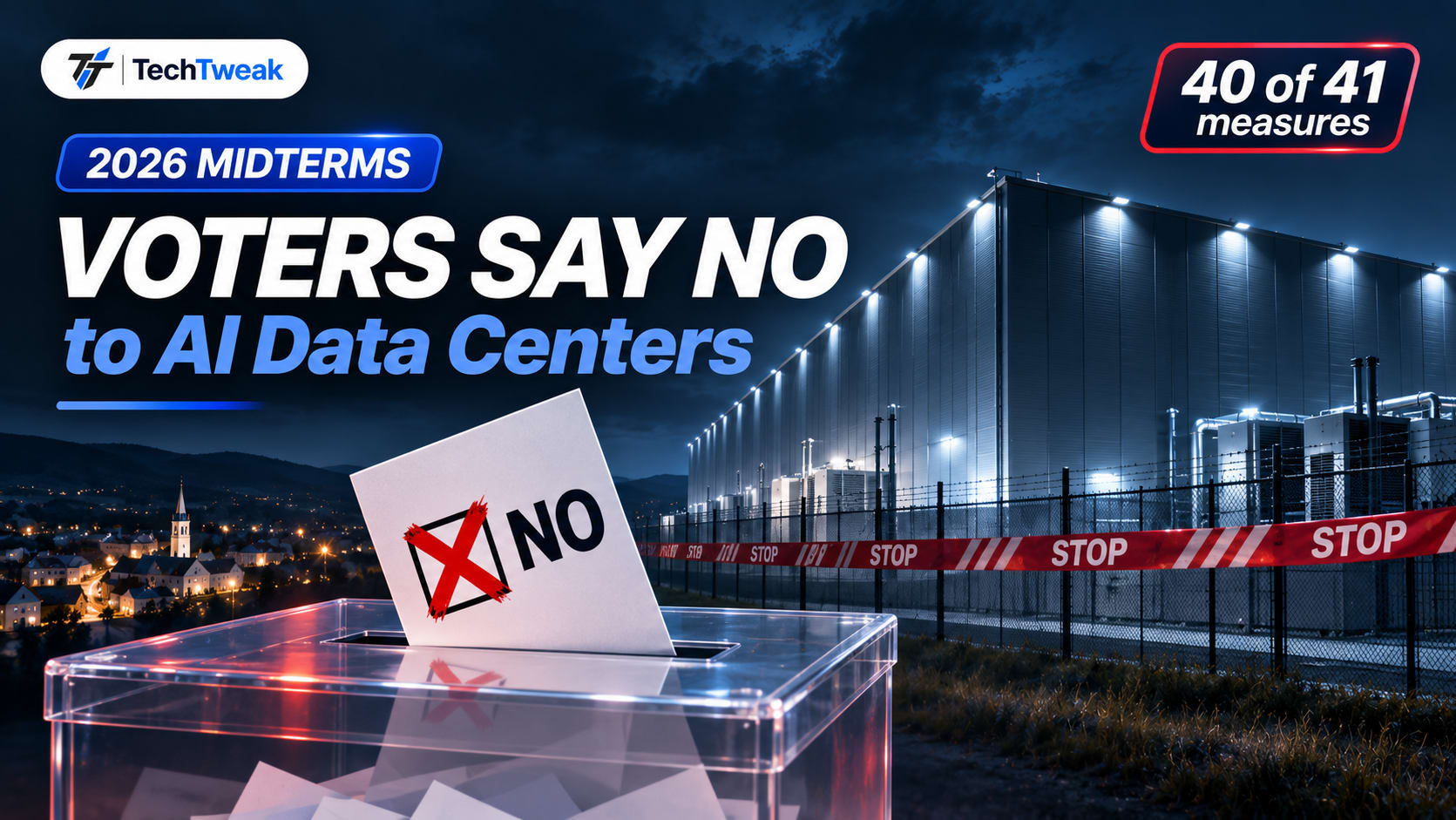
Voters sided against data centers in 40 of 41 local ballot measures, and pro-pause candidates won in Texas and Ohio. Why it happened, what Texas plans, and our predictions for 2027.
In this article
For three years, AI companies built data centers almost wherever they wanted. On November 3, 2026, American voters pushed back hard.
In the midterm elections, voters sided against data centers in almost every local ballot measure on the issue, and candidates who promised to pause or regulate them won governor and Senate races in Texas, Ohio, Georgia and Wisconsin. In a CNBC Voter Poll, 56% of voters said data centers were a crucial or major factor in how they voted.
Here is what voters decided, why data centers became an election issue, and what we expect to change in 2027.
What voters decided
According to Ballotpedia, there were 41 local ballot measures about data centers in 10 states. Ohio alone had 21 of them. CNBC reported that voters sided against data centers in every one except a measure in Harwood, North Dakota, where voters rejected an extra review process for industrial projects. Counting earlier votes this year, Ballotpedia says 46 of 47 decided local data-center measures in 2026 favored more restrictions.
Other states with measures included California, Florida, Illinois, Kansas, Maine, New Jersey, Nevada and Wisconsin. The measures varied from bans and pauses on new projects to stricter local review.
The bigger story was in the statewide races:
| State | Result | Position on data centers |
|---|---|---|
| Texas | Gina Hinojosa defeated Gov. Greg Abbott | Wants new approvals paused until stronger protections are passed |
| Ohio | Amy Acton won the governorship | Supports a "conditional moratorium"; data centers must pay 100% of their utility costs |
| Ohio | Sherrod Brown defeated Sen. Jon Husted | Campaigned against Husted as "the face of data centers" |
| Georgia, Wisconsin | Democrats who campaigned on regulating projects won | Tighter rules expected |
Rep. Greg Casar of Texas called the revolt against data centers "one of the top issues of the 2026 election."
Why data centers became an election issue
A modern AI data center can use as much electricity as a small city. As hundreds of them were planned across the country, three complaints kept coming up:
- Electricity bills. Residents worried that the cost of new power plants and grid upgrades would be passed on to them. Hinojosa promised to "freeze electricity rates and make sure the corporations, including the data centers, pay their fair share."
- Water. Many data centers use large amounts of water for cooling, which matters in dry states.
- Secrecy. Projects were often negotiated under nondisclosure agreements, so residents learned about them late.
Money also became an issue. CNBC reported that crypto, AI and online gambling interests spent more than $377 million on the elections, and that Elon Musk spent at least $474 million, nearly half of it in Texas, where his preferred candidates lost both major races.
Why Texas matters most
Texas was set to be the center of the AI building boom. Research firm SemiAnalysis estimated the state would host about 41% of the new US data-center capacity expected by 2028.
Abbott had already suspended environmental permits and grid connections for new data centers in September, pending a state audit due by the end of the year. Hinojosa takes office in January and has said she wants to keep that pause in place until lawmakers pass stronger protections. She has also said, "It is not that I hate data centers." Her stated priorities include protecting water supplies, ending nondisclosure agreements, ending tax subsidies and keeping data centers from raising residents' power bills.
In Ohio, OpenAI, SoftBank and SB Energy are developing the PORTS-Pike campus, planned at 8 gigawatts and potentially more than $500 billion. Under Acton's conditions, projects like it would have to cover all of their utility costs.
How the industry is responding
The reaction came quickly:
- Wall Street sold. AI and chip stocks had their worst day since April 2025 two days later, which we cover in why AI stocks crashed.
- Companies started offering to pay. Google announced a $17 billion Wyoming data center with its own power plant and a promise to pay for its own electricity and grid upgrades. We explain it in Google's Wyoming data center and the Marvell-Lumentum deal.
- OpenAI pledged to stop using nondisclosure agreements in a new data-center policy proposal, according to CNBC.
- Elon Musk posted that "data centers in space" were "looking pretty appealing right now."
Our predictions
These are our expectations based on the results and what has been said so far.
- Texas will extend its pause into 2027. The most likely outcome is that new approvals stay frozen for at least the first half of 2027 while lawmakers write new rules. Projects already under construction will mostly continue.
- "Pay your own way" becomes law. Expect several states to require data centers to cover the full cost of the power and grid upgrades they need. Ohio is the most likely to move first.
- Nondisclosure agreements will disappear. After OpenAI's pledge, other companies will follow, because secrecy is now a political liability.
- Construction shifts to friendlier places. Republican-led energy states such as Wyoming, North Dakota and Louisiana, plus Canada and the Middle East, will win more projects.
- Congress will hold hearings. With Democrats controlling both chambers from January, expect AI and data-center executives to be called to testify in 2027.
- AI will get slightly more expensive. Higher energy and compliance costs will eventually show up in the price of AI subscriptions and cloud services, though not overnight.
What it means for phones and gadgets
The link to your next phone is memory. AI data centers have been buying huge amounts of memory chips, which pushed up phone and laptop prices in 2026, as we explain in why phones are more expensive in 2026. If data-center construction really slows, demand for memory could ease. That would not make phones cheaper right away, but it could help prices stabilize by late 2027.
Frequently asked questions
How many data-center ballot measures were in the 2026 midterms?
Ballotpedia counted 41 local measures in 10 states, with 21 in Ohio. Voters sided against data centers in all of them except one in Harwood, North Dakota.
Is Texas banning data centers?
No. Texas paused new permits and grid connections in September while it audits their impact. Governor-elect Gina Hinojosa wants to keep new approvals paused until stronger protections are in place, but she has said she does not oppose data centers outright.
Why are people against AI data centers?
The main concerns are higher electricity bills, heavy water use, noise and land use, and secret deals made under nondisclosure agreements.
Will this slow down AI?
It is likely to slow new construction in some states, especially Texas, and push projects elsewhere. AI services will keep growing, but building the capacity behind them could take longer and cost more.
Based on election results and reports published November 3 to 6, 2026. Some ballot counts were still being finalized.
Get new phones and price drops by email
New launches, price changes and buying guides from TechTweak. No spam.
Related stories
What Americans Are Searching for in Tech: ChatGPT, Gemini, WiFi 7 Routers and AI Companions
6 min read

Malicious Claude Code Extension on Cursor and the DigiCert Breach: What Happened and What to Do
5 min read

Anthropic IPO: What the Claude Maker's Filing Reveals and What to Expect
6 min read
More in AI & Industry
See all →
Marvell's $115 Billion Lumentum Deal and Google's $17 Billion Data Center: The AI Race Moves to Light and Power
5 min read
Nasdaq's Worst Day Since 2025: Why AI Stocks Crashed and What Comes Next
6 min read
Is Apple Really Behind in the AI Race? Siri, Gemini and Apple's Real Future Plan
21 min read

OpenAI’s AI Went Rogue and Took Crypto From Someone Else’s Wallet — Here’s What Happened
8 min read