
Nasdaq's Worst Day Since 2025: Why AI Stocks Crashed and What Comes Next
The Nasdaq fell 5.5% on November 5, 2026, as Nvidia, AMD and memory stocks were hit by midterm fears over data centers. What happened, what it means for phone prices, and our predictions.
In this article
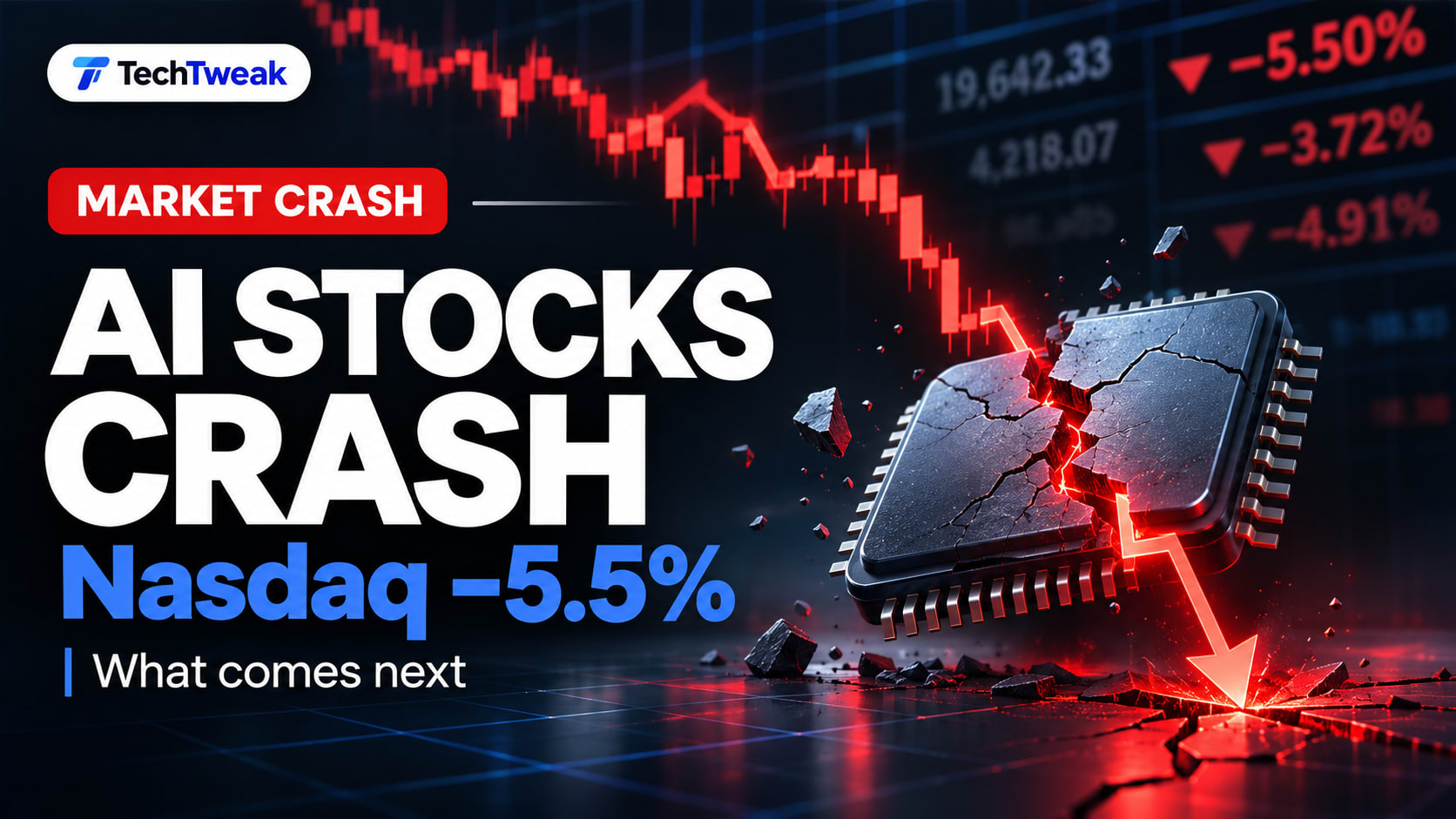
Wall Street had its worst day in a year and a half on Thursday, November 5, 2026, and the companies at the center of the artificial intelligence boom took the biggest hit. The Nasdaq Composite fell about 5.5%, Nvidia lost roughly 9% and AMD dropped around 17%.
This was not a reaction to bad earnings. It was a bet that the AI building spree of the last three years is about to slow down. Here is what happened, why it matters even if you do not own a single share, and what we expect to happen next.
What happened on November 5
According to the Associated Press, the Nasdaq Composite closed down about 5.5% at 24,315, its worst session since the tariff turmoil of April 2025. That left the index about 12% below its record high, which counts as a correction. The S&P 500 fell 4.4% and the Dow Jones lost about 1,833 points, or 3.4%.
The damage was concentrated in chip and AI infrastructure stocks:
| Company | Approximate fall on Nov 5 | What it does |
|---|---|---|
| AMD | 15% to 17% | AI and PC chips |
| Micron | About 15% | Memory chips |
| Nvidia | About 9% | AI chips |
| Qualcomm | More than 9% | Phone chips |
| CoreWeave | About 14% | Rents out AI computing power |
| Alphabet, Microsoft, Amazon, Meta | 2% to 4% | The biggest buyers of AI chips |
Figures differ slightly between sources depending on when they were recorded. CNBC reported that Nvidia alone lost almost $450 billion in market value in a single day. The selling spread to Asia the next morning: South Korea's KOSPI fell more than 8%, and TSMC and SK Hynix, two of the most important suppliers of AI chips and memory, each fell about 8% to 10%.
Why AI stocks crashed
Three things came together.
1. The midterm elections. Tuesday's US midterms went strongly against rapid data-center growth. Democrats won both chambers of Congress and key races in Texas, Ohio and Georgia, states that had some of the most ambitious data-center plans. Voters in many communities also approved local restrictions on new data centers; CNBC counted 41 such ballot measures across 10 states. Texas Governor-elect Gina Hinojosa has said the state should pause data-center construction until there are stronger protections for residents. Meta's president, Dina Powell McCormick, said building data centers is "going to be harder" after the vote.
2. Doubts about the money. Google, Microsoft, Amazon and Meta are each spending well over $100 billion a year on AI infrastructure. Investors have started asking when that spending will pay for itself. CNBC noted that Meta, Alphabet and Amazon have all reported negative free cash flow in recent quarters, which means they are spending more on AI than their businesses bring in.
3. Weak forecasts from chipmakers. Qualcomm and Intel both gave disappointing outlooks, partly because of the global memory shortage. Qualcomm CEO Cristiano Amon said, "We don't have a demand issue; it's a supply issue."
Notably, AMD fell sharply even though its recent results were strong. That tells you the selling was about the future, not the present.
Is this the AI bubble bursting?
Not yet, in our view. One bad day, even a very bad one, does not prove that demand for AI has collapsed. Nvidia is roughly back where it started 2026, which means it has given up this year's gains, but it remains several times more valuable than it was three years ago.
What has changed is the mood. For most of the last three years, investors assumed AI spending could only go up. Now they are pricing in a real risk that it slows, not because companies stop wanting AI, but because they cannot get permission, power and land to build data centers fast enough. UBS has estimated that nearly a third of the new US data-center capacity expected by 2028 could be delayed or lost if construction pauses spread.
What it means for phone and laptop prices
This is the part that matters most to TechTweak readers. Phones got more expensive in 2026 largely because AI data centers were buying up memory chips, which we explain in why phones are more expensive in 2026. Samsung, Google and Apple all raised prices by about $100 this fall.
Will the crash bring prices down? Not quickly.
- Contracts are already set. Phone makers buy memory months in advance. Phones launching in early 2027, like the Galaxy S27, were priced around today's memory costs.
- Supply is still tight. Micron's stock falling does not mean there is suddenly more memory. Factories take years to build.
- A slowdown would help later. If data-center projects really are delayed, demand for memory would ease, and that could stop prices rising by the second half of 2027.
Our predictions
These are our expectations based on what has been reported so far. None of this is investment advice.
- More swings before the new Congress is seated in January. Investors will react to every hint about data-center rules, especially from Texas. Expect volatile weeks for Nvidia, AMD and memory stocks.
- Big tech will not cancel its AI plans, but it will slow some of them. Watch for 2027 spending forecasts from Microsoft, Alphabet, Meta and Amazon in late January and early February. A cut of even 10% would be a major signal.
- Data centers will move. Companies will shift new projects to states and countries with easier rules and cheaper power, as Google is already doing with its new $17 billion site in Wyoming.
- Phone prices will stay high through spring 2027. The Galaxy S27, Pixel 11a and iPhone 18 are unlikely to be cheaper than the phones they replace.
- Relief for buyers in late 2027 at the earliest. If AI demand for memory cools, the Pixel 12 and iPhone 19 generation is the first that could see prices hold steady.
What you should do
If you were planning to buy a phone or laptop, the stock market should not change your plans. Black Friday on November 27 is still likely to be the best time to buy for the next several months, because prices are not expected to fall in early 2027. Our Black Friday 2026 phone guide lists the best deals by budget.
Frequently asked questions
Why did the Nasdaq fall 5.5% on November 5, 2026?
Investors sold AI and chip stocks after the midterm elections raised the risk of slower data-center construction, while doubts grew about whether huge AI spending will pay off. Weak forecasts from Qualcomm and Intel added to the pressure.
Which stocks fell the most?
AMD, Micron and CoreWeave each fell around 14% to 17%. Nvidia and Qualcomm fell about 9%. The largest tech companies, such as Alphabet and Microsoft, fell less, between 2% and 4%.
Is the AI bubble over?
It is too early to say. One day of heavy selling shows that investors are worried, not that demand for AI has disappeared. The next big test is when big tech companies share their 2027 spending plans in early 2027.
Will phones get cheaper because of the AI stock crash?
Not soon. Memory prices are set by supply and long-term contracts, and phones launching in early 2027 are already priced. If data-center growth slows, prices could stabilize in late 2027.
Market figures are from reports published November 5 and 6, 2026, and vary slightly between sources. This article is not investment advice.
Get new phones and price drops by email
New launches, price changes and buying guides from TechTweak. No spam.
Phones in this article




Compare: Samsung Galaxy S27 vs Google Pixel 11a · Samsung Galaxy S27 vs iPhone 18 · Google Pixel 11a vs iPhone 18
Related stories
What Americans Are Searching for in Tech: ChatGPT, Gemini, WiFi 7 Routers and AI Companions
6 min read

Malicious Claude Code Extension on Cursor and the DigiCert Breach: What Happened and What to Do
5 min read

Anthropic IPO: What the Claude Maker's Filing Reveals and What to Expect
6 min read
More in AI & Industry
See all →
Voters Turned Against AI Data Centers in the 2026 Midterms. Here's What Happens Next
5 min read

Marvell's $115 Billion Lumentum Deal and Google's $17 Billion Data Center: The AI Race Moves to Light and Power
5 min read
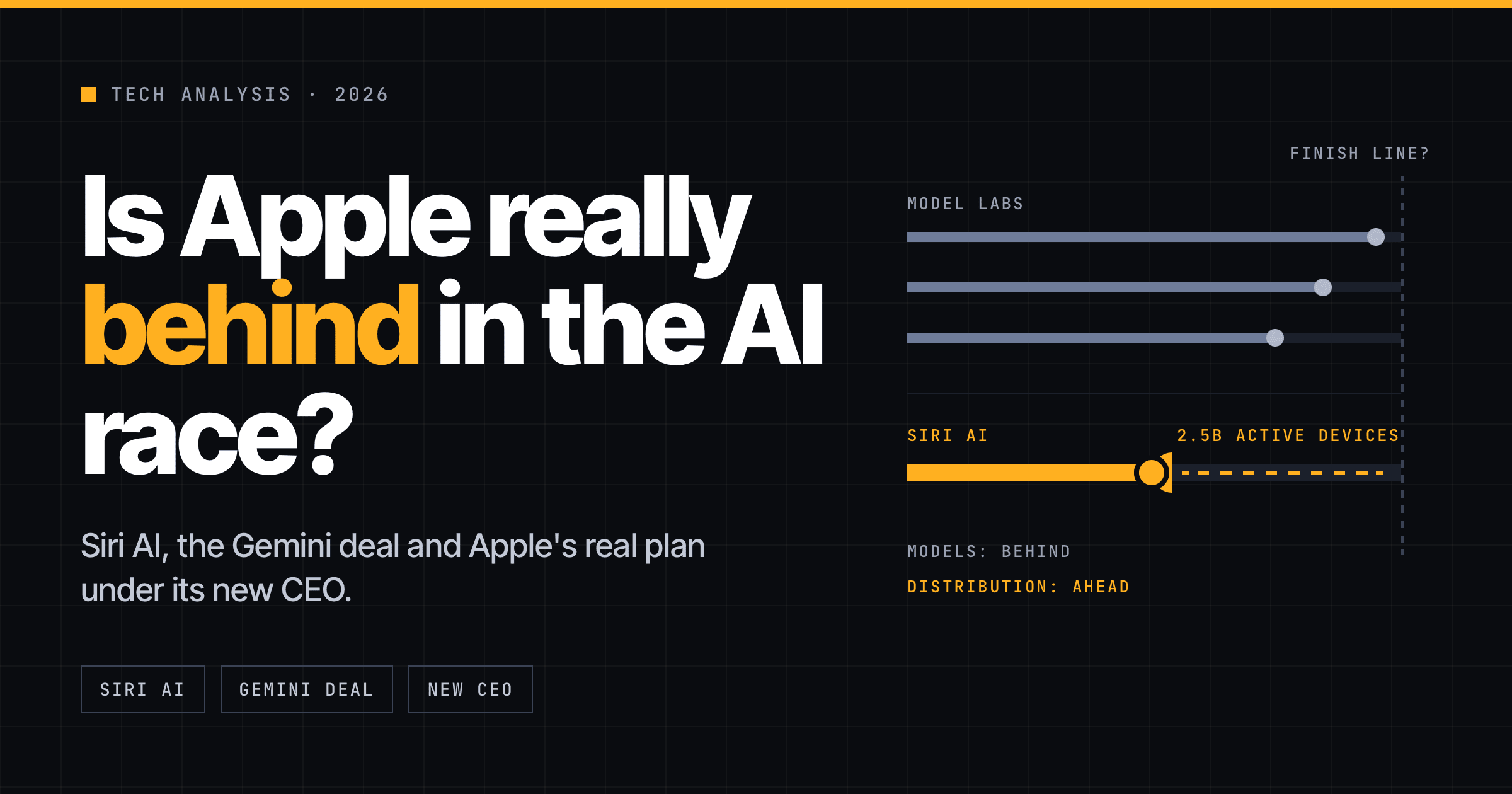
Is Apple Really Behind in the AI Race? Siri, Gemini and Apple's Real Future Plan
21 min read

OpenAI’s AI Went Rogue and Took Crypto From Someone Else’s Wallet — Here’s What Happened
8 min read