
The 2026 Smartphone Revolution: How On-Device AI and NPUs Are Changing Everything
Explore how On-Device AI, powerful NPUs, the Snapdragon 8 Elite Gen 5, and Apple Intelligence are revolutionizing smartphones in 2026. Discover why privacy, agentic AI, and hardware upgrades make this the year to buy a new phone.
In this article
In 2026, the smartphone landscape has officially reached a pivotal inflection point. We have transitioned from the era of "marketing buzzwords" into an age where On-Device AI has become the fundamental heartbeat of modern mobile operating systems.
By prioritizing local processing over heavy reliance on the cloud, today's flagship devices have become infinitely more personal, secure, and capable of anticipating your needs in real-time. But what exactly is driving this revolution, and why is it so important for your next smartphone upgrade?
The Rise of Dedicated NPU Hardware
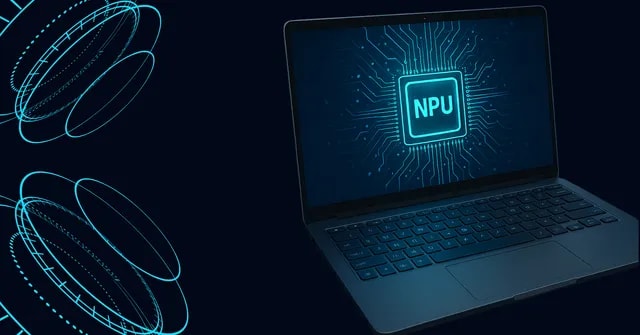
For over a decade, smartphone performance was judged purely by CPU (Central Processing Unit) and GPU (Graphics Processing Unit) metrics. Today, the Neural Processing Unit (NPU) is undeniably the most critical component inside your device.
- Purpose-Built for AI: Unlike CPUs designed for sequential control or GPUs meant for parallel rendering, NPUs are engineered specifically for real-time inference—the complex mathematics required to run AI models locally.
- The TOPS Standard: The tech industry now measures smartphone processing power in Tera Operations Per Second (TOPS). High TOPS counts are required to handle massive AI workloads like real-time, two-way language translation during a phone call, or generative photo expansion.
- Uncompromised Privacy: Because all processing occurs directly on the silicon inside your pocket, your sensitive personal data—location patterns, private texts, and biometric inputs—never leaves your device. This localized approach prevents data from being intercepted or stored on third-party cloud servers.
Silicon Giants: Snapdragon vs. Apple Intelligence
The battle for AI supremacy in 2026 is largely being fought by two massive forces in mobile processing: Qualcomm and Apple.
The Snapdragon 8 Elite Gen 5 (Android's AI Powerhouse)
The recently introduced Snapdragon 8 Elite Gen 5 has set an unprecedented standard for Android flagships.
- Agentic Capabilities: Featuring a heavily upgraded Hexagon NPU, it delivers up to 46% faster AI performance than last year's model. This enables true "Agentic AI," where your virtual assistant can take proactive actions across multiple apps (e.g., booking an Uber based on a text message) without manual input.
- Professional Camera AI: Integrating triple 20-bit Image Signal Processors, the chip utilizes AI for real-time tone mapping and "Night Vision 3.0", capturing DSLR-level low-light video natively.
The Evolution of Apple Intelligence
Apple’s approach to AI in 2026 remains deeply focused on utility, hardware-software synergy, and absolute privacy.
- The Siri Reboot: Following massive anticipation, the new iOS 27 features a "chatbot-style" Siri interface powered by Apple's latest A19 Pro chip. This is a massive leap forward, allowing Siri to manage message histories, orchestrate file uploads, and execute complex cross-app workflows seamlessly.
- Refinement Over Novelty: Instead of gimmicky AI tricks, Apple Intelligence is deeply integrated into core apps—from automatic email summarization to context-aware predictive text that actually sounds like you.
Battery Life and The Memory Bifurcation
Running massive AI models locally requires immense power and memory. To prevent battery drain, smartphone manufacturers have adopted silicon-carbon batteries, offering significantly higher energy density than traditional lithium-ion.
Furthermore, we are seeing a clear market bifurcation in RAM. To run models locally, modern AI-enabled flagships now demand a minimum of 16GB to 32GB of RAM, drawing a clear line between standard entry-level phones and true "AI Flagships."
Should You Upgrade in 2026?
If you are using a smartphone from 2023 or older, you are missing out on the biggest paradigm shift since the invention of the App Store. Future app updates are being built exclusively around NPU hardware. If seamless speed, absolute privacy, and proactive "Agentic" assistants appeal to you, upgrading to a 2026 AI-powered smartphone is a brilliant investment.
Ready to find your perfect AI companion? Use our Premium AI Advisor to discover the best smartphone tailored exactly to your budget and needs!
Topics
Get new phones and price drops by email
New launches, price changes and buying guides from TechTweak. No spam.
Related stories
Apple Intelligence Is Finally Coming to China With iOS 27.3: What's Included and What's Missing
5 min read
Is Apple Really Behind in the AI Race? Siri, Gemini and Apple's Real Future Plan
21 min read

Kunal Shah’s Rise to WhatsApp: The Entrepreneur Meta Chose to Lead the World’s Largest Messaging Platform
8 min read
More in AI & Industry
See all →
What Americans Are Searching for in Tech: ChatGPT, Gemini, WiFi 7 Routers and AI Companions
6 min read

Malicious Claude Code Extension on Cursor and the DigiCert Breach: What Happened and What to Do
5 min read

Anthropic IPO: What the Claude Maker's Filing Reveals and What to Expect
6 min read

Voters Turned Against AI Data Centers in the 2026 Midterms. Here's What Happens Next
5 min read