
Google·Available
Google Pixel 8 Pro
$999US price
The Google Pixel 8 Pro costs $999 in the US for the 128GB model and was released in October 2023. Key specs: Google Tensor G3, 6.7-inch 120Hz LTPO OLED, 50MP Main Camera with OIS, 5050 mAh battery.
Updated

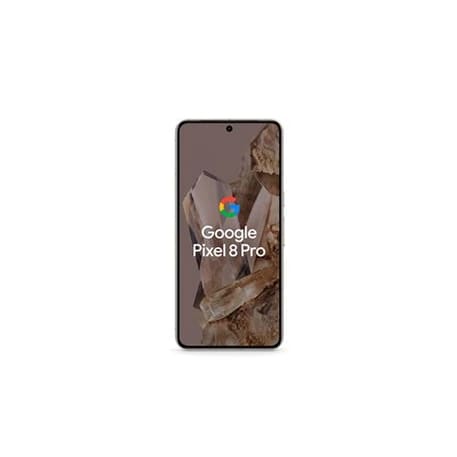
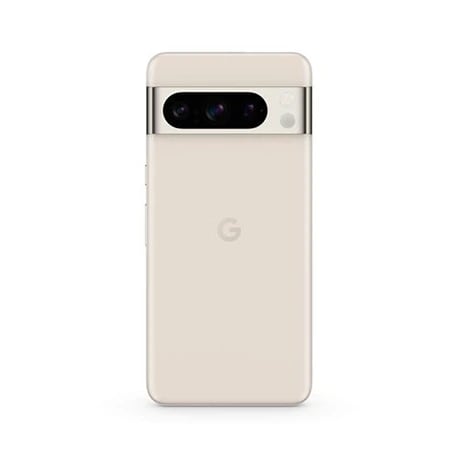
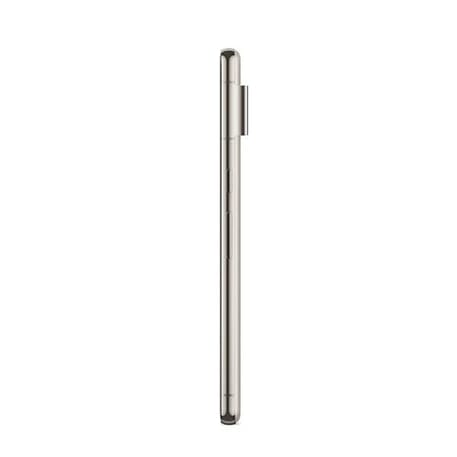
- Chipset
- Google Tensor G3
- Display
- 6.7-inch 120Hz LTPO OLED
- Main camera
- 50MP Main Camera with OIS
- Battery
- 5050 mAh Battery (30W Fast Charging)
Key features
- 5G: yes
- NFC: yes
- eSIM: yes
- Wi-Fi 6/7: yes
- IP68: yes
- Headphone jack: no
- Released
- October 12, 2023
- Updates
- 7 years of OS, security, and feature drop updates
- Colors
- Obsidian, Porcelain, Bay, Mint
- Made in
- Assembled in China/Vietnam/India (Designed in USA)
Google Pixel 8 Pro overview
The Google Pixel 8 Pro is a Google smartphone released in October 2023 with a US reference price of $999. It runs on the Google Tensor G3, has a 6.7-inch 120Hz LTPO OLED display, uses a 50MP Main Camera with OIS and packs a 5050 mAh battery. It supports 5G.
Compare before you buy


General
- Weight
- 213 g (7.51 oz)
- Dimensions
- 162.6 x 76.5 x 8.8 mm (6.40 x 3.01 x 0.35 in)
- Build
- Glass front (Gorilla Glass Victus 2), glass back (Gorilla Glass Victus 2), polished aluminum frame
- SIM
- Nano-SIM and eSIM
- Water resistance
- IP68 dust/water resistant (up to 1.5m for 30 mins)
- Made in
- Assembled in China/Vietnam/India (Designed in USA)
- Variants
- 12GB/128GB, 12GB/256GB, 12GB/512GB, 12GB/1TB
Display
- Type
- LTPO OLED (Super Actua display), 120Hz, HDR10+, PWM dimming (~240Hz)
- Size
- 6.7 inches, 108.7 cm2 (~87.4% screen-to-body ratio)
- Resolution
- 1344 x 2992 pixels, 20:9 ratio
- Refresh rate
- 120Hz LTPO Adaptive (1-120Hz)
- Brightness
- Peak brightness ~2400 nits, HBM 1600 nits
- HDR
- HDR10+
- Protection
- Corning Gorilla Glass Victus 2
- Pixel density
- ~489 ppi
Performance
- Chipset
- Google Tensor G3 (4 nm)
- CPU
- Nona-core (1x3.0 GHz Cortex-X3 & 4x2.45 GHz Cortex-A715 & 4x2.15 GHz Cortex-A510)
- GPU
- Immortalis-G715s MC10
- Process
- 4 nm
- RAM
- 12GB LPDDR5X
- Storage
- 128GB, 256GB, 512GB, 1TB
- Storage type
- UFS 3.1
- Geekbench (single / multi)
- 1700 / 4400
- Cooling
- Vapor Chamber
Rear camera
- Main
- 50 MP, f/1.68, 25mm (wide), 1/1.31", 1.2µm, dual pixel PDAF, multi-zone Laser AF, OIS
- Ultrawide
- 48 MP, f/1.95, 126˚ (ultrawide), 0.8µm, dual pixel PDAF
- Telephoto
- 48 MP, f/2.8, 113mm (telephoto), 1/2.55", 0.7µm, dual pixel PDAF, OIS, 5x optical zoom
- Macro
- Upgraded Macro Focus (focuses as close as 2cm)
- Stabilization
- OIS + EIS support on main and telephoto cameras
- Flash
- Dual-LED flash, Pixel Shift, Ultra-HDR, panorama
- Video
- 4K@24/30/60fps, 1080p@30/60/120/240fps; gyro-EIS, OIS, 10-bit HDR
Selfie camera
- Camera
- 10.5 MP, f/2.2, 20mm (ultrawide), 1/3.1", 1.22µm, PDAF
- HDR
- Auto-HDR
- Portrait mode
- Portrait mode supported via AI
- Video
- 4K@24/30/60fps, 1080p@30/60fps
Battery & charging
- Capacity
- 5050 mAh
- Wired charging
- 30W wired, 23W wireless
- Wireless charging
- 23W wireless
- Reverse charging
- Reverse wireless charging
- Charger in box
- No, sold separately
- USB
- USB Type-C 3.2
Network & connectivity
- 5G
- Yes
- Wi-Fi
- Wi-Fi 802.11 a/b/g/n/ac/6e/7, tri-band, Wi-Fi Direct
- Bluetooth
- 5.3, A2DP, LE, aptX HD
- NFC
- Yes, supports contactless payments
- Positioning
- GPS (L1+L5), GLONASS (G1), GALILEO (E1+E5a), QZSS (L1+L5), NavIC
- IR blaster
- No
- Headphone jack
- No, uses USB-C or Bluetooth
Sensors
- Fingerprint
- Under-display, optical
- Gyroscope
- Yes
- Compass
- Yes
- Accelerometer
- Yes
- Face unlock
- Yes
Software & AI
- OS
- Android 14
- Updates
- 7 years of OS, security, and feature drop updates
- AI features
- Video Boost, Night Sight Video, Best Take, Magic Editor, Audio Magic Eraser, Zoom Enhance, Thermometer App
- Circle to Search
- Yes
- AI photo editing
- Yes
- Live translation
- Yes
- AI assistant
- Yes
Disclaimer. We cannot guarantee that the information on this page is 100% correct. Read more
Pros and cons
Pros
- Features a beautiful, completely flat 6.7-inch OLED display, finally abandoning the highly frustrating curved edges.
- Google promises 7 years of Android OS updates and feature drops.
- Phenomenal camera system, with significant low-light improvements to the massive 5x optical telephoto lens.
- Introduced a built-in infrared temperature sensor, an incredibly unique (if slightly gimmicky) hardware feature.
Cons
- Suffered a noticeable base price increase over the highly competitive pricing of the older Pixel 7 Pro.
- The Tensor G3 chip still heavily trails far behind modern Snapdragon and Apple chips in raw gaming performance.
- Many highly touted 'Pro' AI features, like Video Boost, actually require the phone to be connected to the cloud to process.
- Thermal management and overall battery life remain highly inconsistent under heavy gaming or processing load.
Frequently asked questions
How much does the Google Pixel 8 Pro cost in the US?
The Google Pixel 8 Pro starts at $999 in the US for the 128GB model. It comes with 128GB, 256GB, 512GB and 1TB of storage; larger storage costs more.
When was the Google Pixel 8 Pro released?
The Google Pixel 8 Pro was released in October 2023.
How big is the Google Pixel 8 Pro?
The Google Pixel 8 Pro measures 162.6 x 76.5 x 8.8 mm (6.40 x 3.01 x 0.35 in) and weighs 213 g (7.51 oz), with a 6.7 inches, 108.7 cm2 (~87.4% screen-to-body ratio).
What colors and storage options does the Google Pixel 8 Pro come in?
The Google Pixel 8 Pro comes in Obsidian, Porcelain, Bay and Mint. Storage options: 128GB, 256GB, 512GB and 1TB.
Does the Pixel 8 Pro have a flat screen?
Yes! Google finally abandoned the highly controversial curved edges of past models, giving the Pixel 8 Pro a beautiful, completely flat 6.7-inch display.
How long will the Pixel 8 Pro get updates?
Google promised 7 years of Android OS upgrades, security patches and Feature Drops, until October 2030.
What does the temperature sensor do?
The Pixel 8 Pro features a unique built-in infrared temperature sensor next to the cameras, allowing you to instantly scan objects (and eventually humans) to check their exact temperature.
Is the Tensor G3 fast?
It is perfectly fast for daily UI tasks and AI features, but it still noticeably trails behind its Snapdragon and Apple competitors in raw graphical gaming performance and sustained heat management.
Do the AI features work offline?
While some definitely do, many of the most highly advertised 'Pro' features, such as Video Boost, actually strictly require the phone to upload the video to Google's cloud servers for processing.