
iPhone Air vs Motorola Razr+ (2026)
Detailed specifications comparison between the Apple iPhone Air and the Motorola Razr+ (2026).
iPhone Air or Motorola Razr+ (2026): which should you buy?
On paper, the iPhone Air leads on compact size, weight and water resistance, while the Motorola Razr+ (2026) is ahead on battery size, charging speed and display smoothness. Pick the iPhone Air if you prefer a smaller phone, and the Motorola Razr+ (2026) if battery life matters most to you.
Quick verdict
| Area | iPhone Air | Motorola Razr+ (2026) | Winner |
|---|---|---|---|
| Battery | 3,149 mAh | 4,500 mAh | Motorola Razr+ (2026) |
| Wired charging | 20W | 45W | Motorola Razr+ (2026) |
| Refresh rate | 120Hz | 165Hz | Motorola Razr+ (2026) |
| Weight | 165 g | 189 g | iPhone Air |
| Dust & water rating | IP68 | IP48 | iPhone Air |
| Launch price | $1,099 | $1,099.99 | Too close to call |
Across the 6 areas in the table, the iPhone Air wins 2, the Motorola Razr+ (2026) wins 3, and 1 is too close to call. That makes the Motorola Razr+ (2026) the stronger phone on paper, but the right pick still depends on what you value.
Choose the iPhone Air if you want
- A more compact phone (6.5-inch screen)
- A lighter phone (165 g vs 189 g)
- Better dust and water protection (IP68 rating)
Choose the Motorola Razr+ (2026) if you want
- A bigger battery (4,500 mAh vs 3,149 mAh)
- Faster wired charging (45W vs 20W)
- A smoother display (165Hz vs 120Hz)
- A bigger screen (6.9 inches)
- The newer model
The iPhone Air suits you if you prefer a smaller phone and you want a lighter phone. The Motorola Razr+ (2026) suits you if battery life matters most to you and you want faster charging. Under the hood, the iPhone Air runs on the Apple A19 Pro and the Motorola Razr+ (2026) on the Snapdragon 8s Gen 3.
Based on manufacturer specifications, not hands-on use. Real battery life and camera quality also depend on software tuning.
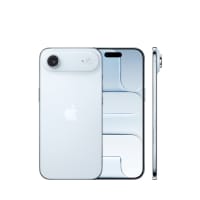
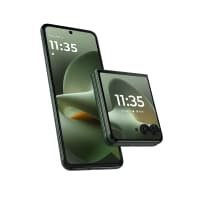
| Release Date | September 19, 2025 | May 2026 |
|---|---|---|
| Operating System | iOS 26 at launch, now iOS 27, iOS 27 | Android 16 |
| Display Size | 6.5 inches | 6.9 inches (Main), 4.0 inches (Cover) inches |
| Display Type | Super Retina XDR OLED, ProMotion, Always-On | Foldable LTPO AMOLED, 165Hz |
| Resolution | 2736 x 1260 | 1084 x 2640 |
| Refresh Rate | 120Hz | 165Hz |
| Processor / Chipset | Apple A19 Pro | Qualcomm Snapdragon 8s Gen 3 (4 nm) |
| RAM | - | 12GB |
| Internal Storage | 256GB, 512GB, 1TB | 256GB |
| Main Camera | 48 MP, f/1.6, 26mm, sensor-shift OIS | 50 MP, f/1.8, OIS |
| Selfie Camera | 18 MP Center Stage, f/1.9 | 32 MP, f/2.4 |
| Battery Capacity | 3149 mAh | 4500 mAh |
| Charging Speed | 50% in 30 min with a 20W+ adapter | 45W wired |
| 5G Support | ||
| NFC | ||
| 3.5mm Jack |
Key differences: iPhone Air vs Motorola Razr+ (2026)
- Motorola Razr+ (2026) has the bigger battery (4,500 mAh vs 3,149 mAh on the iPhone Air).
- iPhone Air has the faster wired charging (50W vs 45W on the Motorola Razr+ (2026)).
- Motorola Razr+ (2026) has the higher refresh rate (165Hz vs 120Hz on the iPhone Air).
- Motorola Razr+ (2026) has the larger screen (6.9-inch vs 6.5-inch on the iPhone Air).
- iPhone Air has the lower reference price (1,099 USD vs 1,099.99 USD on the Motorola Razr+ (2026)).
- Motorola Razr+ (2026) is the newer phone, released about 7 months later.
Generated from manufacturer specifications. Prices are reference launch prices in USD and vary by market.