
TechTweak
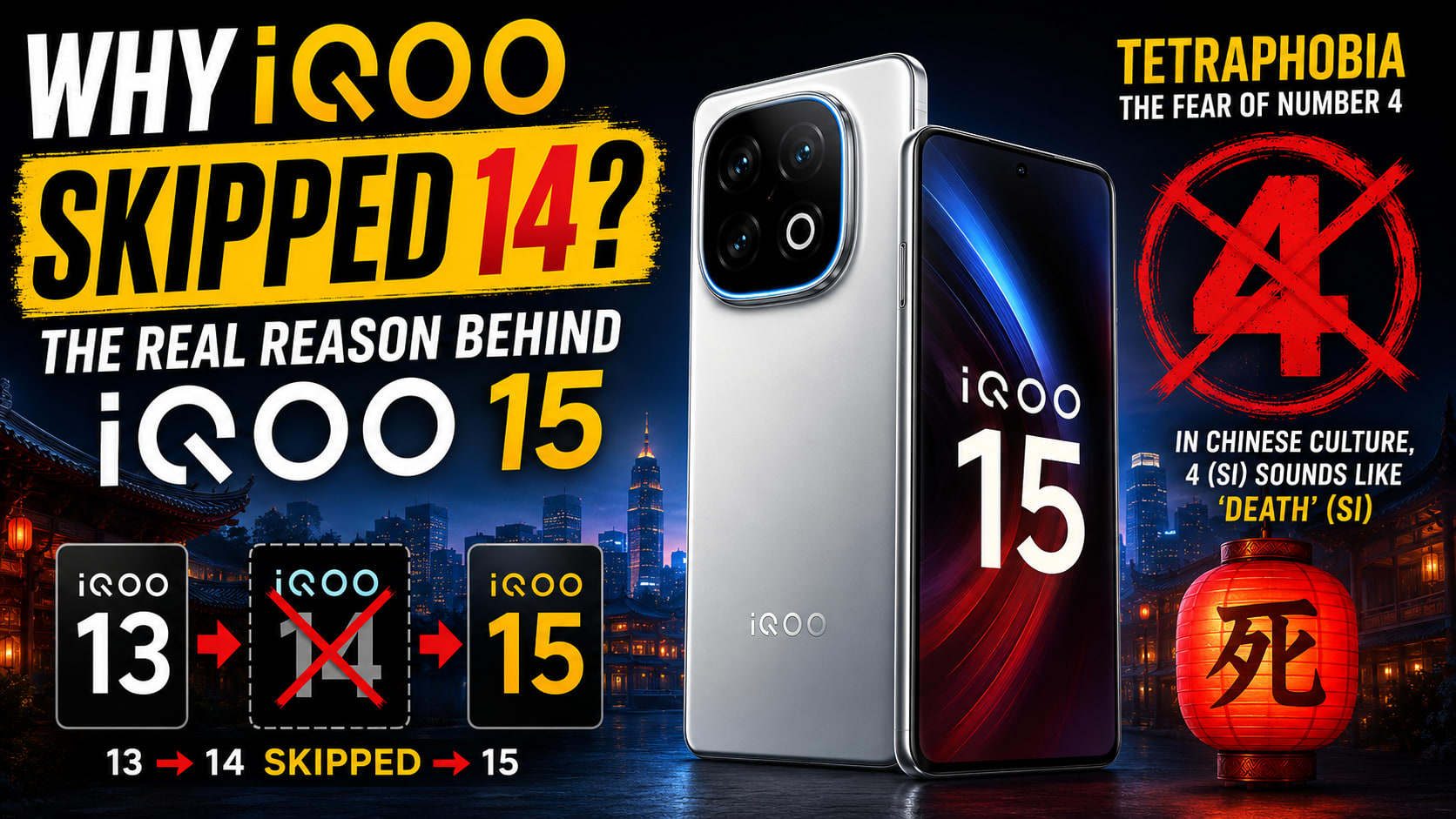
The smartphone industry is full of surprising branding decisions, but one of the most talked-about developments recently is iQOO's decision to skip the "iQOO 14" name and move directly from iQOO 13 to iQOO 15. While this may seem unusual to global consumers, the reasoning is deeply connected to cultural traditions and long-standing beliefs in China.
In this article, we explore why iQOO chose the iQOO 15 branding, the cultural significance of the number 4, and how similar naming strategies have been adopted by other technology companies across Asia.
Following the release of the iQOO 13, many smartphone enthusiasts expected the next flagship device to be called the iQOO 14. Instead, reports and official branding materials revealed that the company would proceed directly to the iQOO 15 series.
The primary reason is believed to be a cultural phenomenon known as Tetraphobia, a widespread superstition in several East Asian countries, particularly China.
Tetraphobia refers to the avoidance of the number 4 because its pronunciation in Mandarin Chinese is remarkably similar to the word for "death." As a result, many businesses, property developers, airlines, hotels, and technology brands often avoid using the number 4 in product names, room numbers, or floor designations.
Tetraphobia comes from the Greek words meaning "fear of four." In Chinese culture, the number 4 is often associated with misfortune because:
Because of this linguistic similarity, many Chinese consumers consider the number 4 unlucky.
This belief is so common that some buildings in China skip entire floor numbers such as:
In some cases, multiple floors containing the digit 4 are omitted entirely.
While the number 4 itself is often avoided, the number 14 can carry an even stronger negative association in certain Chinese dialects.
Depending on regional pronunciation, 14 may be interpreted in ways that loosely resemble phrases connected to misfortune or inevitable death. Although interpretations vary, many companies prefer to avoid any potential negative symbolism when launching high-profile products.
For a flagship smartphone series worth millions of dollars in marketing investment, avoiding potentially controversial numbering is often considered the safer business decision.
Jun 22, 2026 News
Jun 21, 2026 News
Jun 7, 2026 News
Jun 5, 2026 Flagship Phones
Jun 2, 2026 News
Interestingly, this is not the first time iQOO has skipped a number associated with 4.
The company previously jumped from:
without launching an iQOO 4 smartphone.
This historical precedent suggests that the brand has maintained a consistent approach toward avoiding the number 4 throughout its product lineup.
The transition from iQOO 13 to iQOO 15 follows the same strategy.
iQOO is far from the only company influenced by Tetraphobia.
Several industries across Asia have adopted similar practices:
Many apartment complexes and office towers skip floors containing the number 4.
Some airlines omit row numbers featuring 4, similar to how some Western airlines avoid row 13.
Hotels frequently avoid room numbers such as 404, 414, or 444.
Various smartphone and technology brands have adjusted model names to align with regional cultural preferences.
This demonstrates how cultural considerations can influence global business decisions just as strongly as technical or marketing factors.
Not necessarily.
While many Chinese companies choose to avoid the number 4, others continue using it normally depending on their target audience and branding strategy.
Modern younger consumers may place less importance on traditional superstitions than previous generations. However, because China remains one of the world's largest smartphone markets, companies often prefer to avoid unnecessary risks when naming flagship products.
Beyond cultural reasons, the jump to iQOO 15 may also provide marketing advantages:
The move from iQOO 13 to iQOO 15 highlights how cultural traditions continue to influence technology brands, even in an era driven by innovation and globalization.
While smartphone specifications, AI capabilities, and hardware advancements often dominate headlines, product naming remains an important aspect of branding. For companies operating in culturally diverse markets, even a single number can affect perception and consumer acceptance.
As a result, the iQOO 15 name is not merely a marketing choice—it also reflects the cultural context in which one of the world's largest smartphone markets operates.
The decision to skip the iQOO 14 branding and move directly to iQOO 15 is widely believed to be linked to Tetraphobia, the traditional East Asian avoidance of the number 4. Given that iQOO previously skipped the iQOO 4 name as well, the company's latest naming strategy follows an established pattern.
Whether viewed as a cultural consideration, a marketing tactic, or both, the transition from iQOO 13 to iQOO 15 serves as a fascinating example of how local traditions can continue to shape global technology brands in 2026.